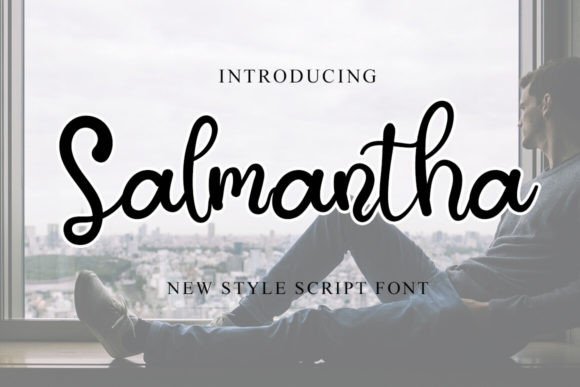
Evaluating Salmantha Font for Handwritten Design Projects
Selecting the right typeface is a foundational decision in visual communication. It influences readability, brand personality, and overall user experience. Among the vast array of available typefaces, handwritten fonts occupy a specific niche that prioritizes human connection, approachability, and organic texture. Salmantha Font is one such typeface designed to emulate natural handwriting while maintaining a level of polish suitable for professional design applications. This evaluation explores the characteristics, use cases, and practical considerations of using Salmantha Font in various design contexts.
Understanding the Design Characteristics of Salmantha Font
To determine if a font aligns with your project goals, it is essential to first understand its structural attributes. Salmantha Font is categorized as a handwritten or script-style typeface. Its defining feature is a "sweet and friendly" aesthetic. This description refers to the rounded terminals, consistent stroke weight variations, and open counters (the negative space inside letters like 'e' or 'a') that give the characters a welcoming appearance.
The font’s style is described as natural and unique. In typography, "natural" often implies that the letterforms mimic the irregularities of pen on paper without being overly chaotic. Unlike strict calligraphy scripts that require precise angles and dramatic thick-and-thin contrasts, Salmantha tends toward a more casual, marker-like or pencil-like feel. This makes it less formal than traditional serif or sans-serif fonts but more legible than highly decorative novelty scripts.
The versatility of Salmantha Font stems from this balance. It avoids the rigidity of mechanical fonts while steering clear of the illegibility often found in extreme script designs. The result is a typeface that feels personal yet controlled, making it adaptable to a wide range of creative needs.
Key Benefits and Strengths
When evaluating Salmantha Font, several strengths emerge that make it a compelling choice for specific design challenges.
- Emotional Resonance: Handwritten fonts inherently convey warmth and authenticity. Salmantha’s friendly character helps brands or projects appear more approachable and human-centric. This is particularly valuable in industries focused on care, creativity, or community.
- Versatility Across Media: Due to its balanced stroke weight, Salmantha Font performs well in both digital and print environments. It remains legible at smaller sizes when used for body text accents, though it shines brightest in display applications.
- Visual Uniqueness: In a landscape dominated by geometric sans-serifs, Salmantha offers a distinct visual identity. Its unique style can serve as a focal point in posters, invitations, or social media graphics, drawing the viewer’s eye through texture rather than color alone.
- Creative Freedom: The prompt notes that "the only limit is your imagination." This suggests that Salmantha pairs well with other elements. It can be combined with minimalist layouts to add warmth or paired with bold graphics to soften their impact.
Ideal Use Cases and Applications
Not every project requires a handwritten font. However, there are specific scenarios where Salmantha Font is a strong fit. Understanding these contexts helps designers make informed decisions.
Personal Branding and Lifestyle Content
Bloggers, influencers, and small business owners often seek to build a personal connection with their audience. Salmantha Font is ideal for headers, logos, or quotes in lifestyle content. Its friendly tone reinforces the idea of a direct conversation between the creator and the reader.
Event Invitations and Stationery
Weddings, birthdays, and casual corporate events benefit from the elegance and warmth of handwritten styles. Salmantha’s natural flow mimics the effort put into hand-lettered invites, providing a premium feel without the cost of custom calligraphy. It works particularly well for save-the-dates, RSVP cards, and table numbers.
Product Packaging for Artisanal Goods
Brands selling handmade crafts, baked goods, or organic products often use packaging to signal quality and care. Salmantha Font can label products in a way that feels crafted rather than mass-produced. The font’s uniqueness helps shelf presence stand out among competitors using standard industrial typefaces.
Social Media Graphics
In the fast-paced environment of social media, text overlays need to capture attention quickly. Salmantha’s distinctive shape ensures high visibility. It is effective for motivational quotes, announcement banners, and story highlights where personality is key.
Tradeoffs and Considerations
While Salmantha Font offers many advantages, it is not a universal solution. Designers must weigh potential limitations against their project requirements.
Legibility at Scale
Handwritten fonts generally have lower legibility thresholds compared to sans-serif or serif fonts. Using Salmantha for long paragraphs of body text is rarely advisable. The natural variations in letterforms can cause reading fatigue over extended periods. It is best reserved for headlines, subheads, and short phrases.
Tone Appropriateness
The "sweet and friendly" nature of Salmantha may clash with serious or authoritative content. For legal documents, technical manuals, or news reporting, this font might undermine credibility. In such cases, a neutral, objective typeface is more appropriate. Designers should ask whether the brand voice aligns with the font’s personality.
Licensing and Availability
As with any commercial typeface, proper licensing is crucial. Designers must ensure they have the correct rights for their intended use, whether for personal projects, client work, or commercial merchandise. Always verify the license terms before downloading or purchasing Salmantha Font to avoid legal complications.
Alternatives and Comparative Context
If Salmantha Font does not fully meet your needs, considering alternatives is a prudent step. The market offers several handwritten fonts with different characteristics.
- For More Formal Scripts: If you need elegance for high-end weddings, consider brush scripts with higher contrast, such as Great Vibes or Allura. These offer a more refined look but may lack the casual friendliness of Salmantha.
- For Greater Legibility: If you require a handwritten style that works better in longer texts, look for "semi-script" or "casual sans" hybrids. Fonts like Caveat or Patrick Hand offer a handwritten feel with simpler structures that enhance readability.
- For Bold Impact: If you need a statement font for large-scale branding, explore chunky marker fonts. These provide visual weight that Salmantha’s lighter strokes may not achieve.
Evaluating these options allows you to select the tool that best matches the specific demands of your project. Salmantha sits comfortably in the middle ground—more structured than a pure sketch, but more relaxed than a formal script.
Practical Decision-Making Insights
To determine if Salmantha Font is the right choice, consider the following checklist:
- Define the Tone: Does your project aim to be warm, personal, and informal? If yes, Salmantha is a strong candidate.
- Assess Text Volume: Will the font be used for short displays or long reading? If the latter, prioritize legibility over style.
- Check Pairing Potential: Test Salmantha alongside your chosen body font. A clean sans-serif often balances the complexity of a handwritten display font effectively.
- Review Technical Specs: Ensure the font file includes necessary weights and character sets (such as accented characters) if your language requires them.
By approaching typeface selection with these criteria, designers can leverage Salmantha Font’s unique strengths while avoiding common pitfalls. Its natural style and friendly demeanor make it a valuable asset in the designer’s toolkit, provided it is applied with intention and context in mind.